












NewProduct Score, 4T Segmentation, Price War and Broken Size are live.See what's new
Feedance
Solutions · Home & Furniture

Stop paying to advertise what you
can't sell

One sofa can come in a dozen fabric, color and size combinations. Feedance tracks every variant down to the SKU, keeps sold-out configurations out of your ads and builds a creative for every product.

Where the catalog budget goes
Example fashion catalog · 38,010 products
Product Score43% score below 1
4T segment
Top8.4%
Tolerable0.6%
Tranquil89%
Toxic2%
44%of matched products are cheaper elsewhere
1 in 15size runs broken, still advertised
Written to your feed as labels
GoogleMetaTikTok200+ channels
The challenge

Where furniture ad budgets leak

Furniture catalogs run on variants and long lead times. When the feed does not track them exactly, ads send shoppers to configurations that cannot be bought.

  • Variant sprawl

    One base product can carry a dozen fabric, color and size combinations, each with its own price and stock.

  • Long, uneven lead times

    Restocks follow manufacturing and shipping schedules, so in stock has to stay true for the whole ad run.

  • Sold-out configurations in ads

    A shopper who clicks through to a discontinued configuration rarely comes back to try again.

  • Images spread across systems

    Room scenes, swatches and dimension diagrams often live apart from price and stock data.

  • Stock that differs by warehouse

    The same SKU can be available in one region and backordered in another.

  • Priced out without knowing it

    When a competitor sells the same item cheaper, the click is paid for and the sale happens elsewhere.


How Feedance helps

Score, segment, fix, then let every channel act on it

Feedance reads your product feed and GA4, decides for each product and writes the result back as feed labels. Your campaigns stay where they are; they just get a better catalog.

Products
Every product, every signal, on every sync
Synced
Product
Score
4T segment
Price War
Sizes in stock
Crew neck T-shirtT-shirts
86
Top
Best price
5 of 5
Linen shirtShirts
74
Top
Same price
6 of 6
Low top sneakerSneakers
58
Tolerable
More expensive
1 of 7Broken
Canvas toteBags
12
Tranquil
Best price
One size
Puffer jacketOuterwear
3
Toxic
More expensive
1 of 5Broken
  • Know which products earn

    Product Score

    A 0 to 100 score for every product from its views, add to carts and purchases over the last 1, 7 and 30 days.

    Explore Product Score
  • Know which products earn

    4T Segmentation

    Top, Tolerable, Tranquil or Toxic. Scale Top, fix or cut Toxic, give Tolerable more reach.

    Explore 4T Segmentation
  • Fix

    Feed optimization

    Rules, filters, channel exports and supplementary feeds turn one source feed into a tailored feed for each of 200+ channels.

    Explore Feed Optimization
  • See where you lose

    Price War

    Your price against named competitors for every matched product: best, same or more expensive.

    Explore Price War
  • Create

    Creative Suite

    Static, video and HTML5 creatives built from feed data, so price and campaign changes reach every product image automatically.

    Explore Creative Suite
Integrations

Connect your store. Reach every channel

Plug in the platform your store runs on, or any XML, CSV or API feed. Feedance sends the optimized, labelled feed to each channel in its own format.

Data in · 70+ platforms

Feeds out · 200+ channels

In depth

Home & Furniture: the full guide

Read the full guide

Product Feeds for Furniture and Home Goods

Furniture and home goods retail runs on variants — the same sofa in five fabrics, the same table in three finishes, the same lamp in two sizes — sold out of warehouses with real lead times and, frequently, real stock limits per configuration. When a feed doesn't track that granularity accurately, ad platforms keep promoting configurations that are no longer sellable.

Feedance structures home goods catalogs down to the variant and warehouse level, so every ad reflects what's actually available to ship, and pairs that accuracy with automated creative generation across the full range of SKUs a furniture catalog typically carries.

Where Furniture Feeds Usually Break

  • Variant sprawl — one base product can carry a dozen fabric, color, and size combinations, each needing its own price and stock status.
  • Long and uneven lead times — furniture restocks on a manufacturing or shipping schedule, not overnight, so "in stock" needs to mean it reliably for the ad's full run.
  • High-consideration purchases punish bad data — a shopper who clicks through to a discontinued configuration is unlikely to come back and try again.
  • Large, inconsistent image sets — room-scene photography, swatch images, and dimension diagrams often live in different systems than the price and stock data.
  • Multi-warehouse fulfillment means the same SKU can be available in one region and backordered in another.

How Feedance Keeps Furniture Feeds Accurate

Variant-level structuring

Every fabric, color, and size combination is represented as its own tracked item in the feed, tied back to its base product via item group ID, so pricing and stock status stay correct at the exact configuration level a shopper would click into.

Out-of-stock removal before spend is wasted

Feedance pulls sold-out or backordered variants out of active feeds automatically, rather than letting ad platforms keep serving configurations that can't be fulfilled.

Automated creative across the full range

Generated creative applies consistently across every variant and SKU in the catalog, so newly added colors or finishes get ad coverage without waiting on a design queue.

Warehouse-aware availability

For retailers fulfilling from multiple warehouses, feed data reflects the stock and lead time relevant to the region being advertised to.

Who Chooses Feedance and Why

  • Variant-Level Accuracy — every fabric, color, and size tracked and priced individually.
  • No Wasted Spend on Sold-Out Stock — unavailable configurations drop out of active ads automatically.
  • Creative Coverage for the Full Catalog — new SKUs get ad-ready creative without manual production.
  • Multi-Warehouse Aware — availability reflects what can actually ship to that shopper.

Stop Paying to Advertise What You Can't Sell

Vivense increased ROAS 32% primarily by fixing one thing: ad spend that kept going toward out-of-stock variants. For furniture and home goods catalogs — where variant counts are high and restock timing is uneven — that same fix is usually the single highest-leverage change available before touching bids or budgets at all.

Other solutions

The same signal, for every catalog and team

All industries

E-Commerce

Scores every product from its own views, carts and purchases, keeps stock and prices current in the feed, and labels what to push on every channel.

+25%CTR · Karaca
Learn more: E-Commerce

Textile

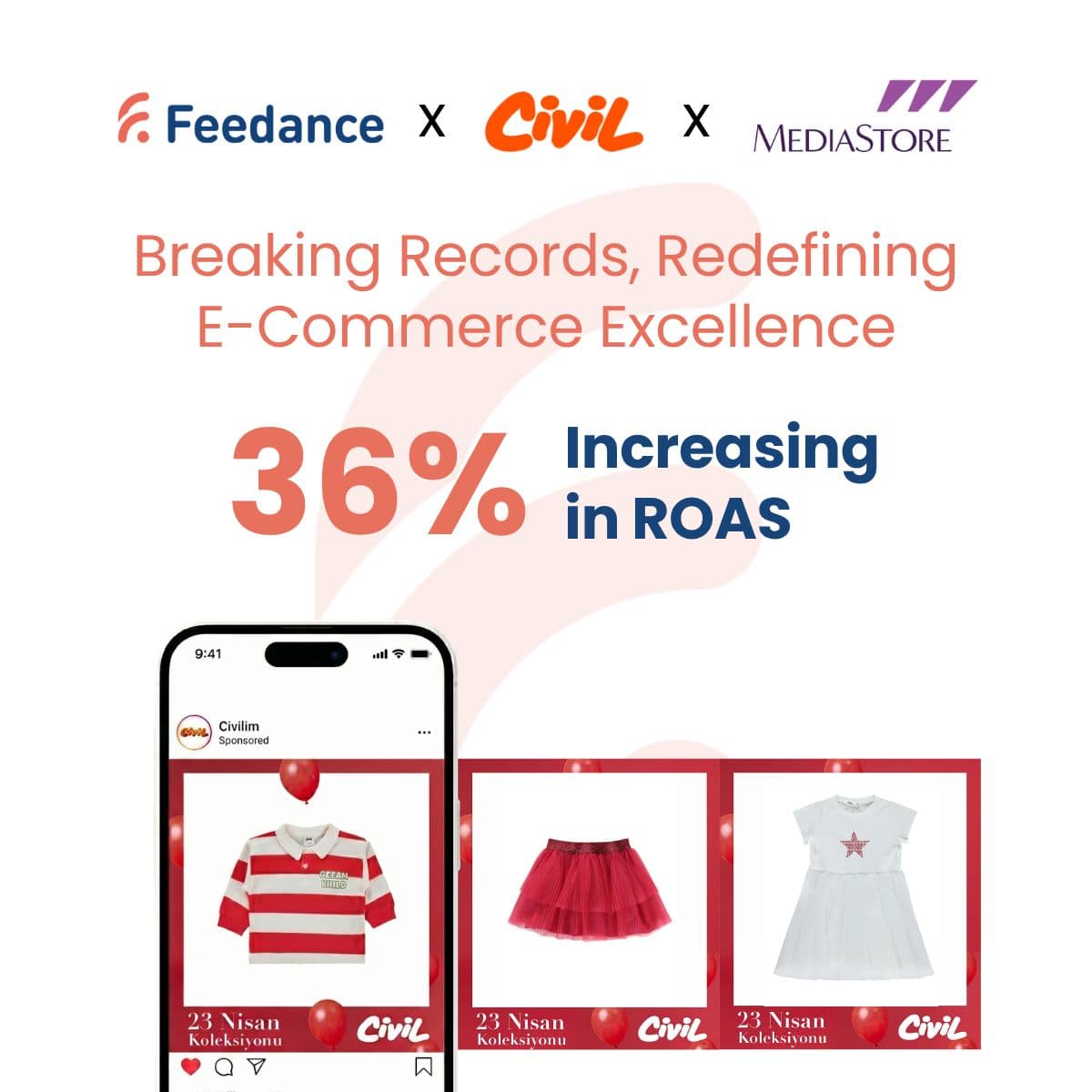
Flags broken size runs, scores every style and shows where competitors sell cheaper, so fashion catalogs advertise what is in stock and priced to win.

+36%ROAS · Civil
Learn more: Textile

Betting

Builds dynamic catalog ads from live odds and match times, and enriches the feed with match-time data for real-time campaigns.

+49%ROAS · Bilyoner
Learn more: Betting

Travel

Keeps hotel, flight and package feeds current on price and availability, and turns each offer into a catalog creative with board type and location.

Learn more: Travel

Automotive

Turns dealership inventory into ad-ready vehicle feeds with price, year and mileage, plus a creative for every vehicle.

+110%conversion rate · Borusan Next
Learn more: Automotive

Beauty & Cosmetics

Structures shade, size and formula variants and puts price and campaign details on every creative, so fast-moving beauty catalogs stay ad-ready.

+127%ROAS · Note Cosmetics
Learn more: Beauty & Cosmetics
FAQ

Questions about Feedance for home and furniture

A first set of answers. Open the full list for more.

How does Feedance handle sofas with many fabric, color and size variants?

It tracks each variant down to the SKU, with its own price and stock. That means one base product can carry a dozen combinations in the feed, and a configuration you can no longer sell can be treated separately instead of pulling the whole product out of your ads.

Can Feedance stop us from advertising sold-out furniture?

Yes. A product filter can exclude anything marked out of stock from an export, and it adjusts as your data changes, so a sold-out configuration leaves on the next sync. Choose an update frequency that fits how fast your stock moves, within what your plan allows.

Can Feedance reflect stock that differs by warehouse?

Partly, if your data carries it. Feedance can merge inventory tools into the feed, add region-level context so products and labels differ by location, and send store-level stock for Google Local Inventory Ads. Tell us how your warehouse stock is recorded and we will check it on your catalog.

Can Feedance create visuals for a large furniture catalog?

Yes. Creative Suite produces image, video and HTML5 creatives in bulk from your own templates and feed data, so a new color or line does not wait on design work. You can also use filters or 4T labels to create visuals only for the products you plan to advertise.

See the full FAQ

See which
products earn.

Connect your feed and GA4. We show Product Score, 4T, Price War and Broken Size on your own catalog.