









Know
which products earn
Modules
Product Score4T Segmentation

 Shopify IntegrationStart optimizing with powerful integration
 Woocommerce IntegrationWordpress compatible e-commerce integration
 Magento IntegrationStart optimizing Magento very quickly
 Opencart IntegrationOpen source e-commerce platform integration
Feedance scores every product in your catalog, finds where you lose on price and stock, and writes that signal into your feed. Google, Meta and TikTok then spend on what sells.
 MarTech Awards2025 · Technology
 Istanbul Marketing Awards2025 · Automotive
 Mixx Awards2026 · Bronze


The catalog decides what gets shown, yet it carries no signal about what sells, what is priced out or what is out of size. Feedance adds that signal.

Feedance reads every product, decides what it deserves and writes the answer into your feed. Every day.
 Google
 Meta
Meta TikTok
 Criteo
 ChatGPT
One score from 0 to 100 for every product, built from views, add to carts and purchases over 1, 7 and 30 days.
Two signals, four segments. Every product gets one label from its own traffic and return.
Your price against theirs, for every matched product, with the competitor named.
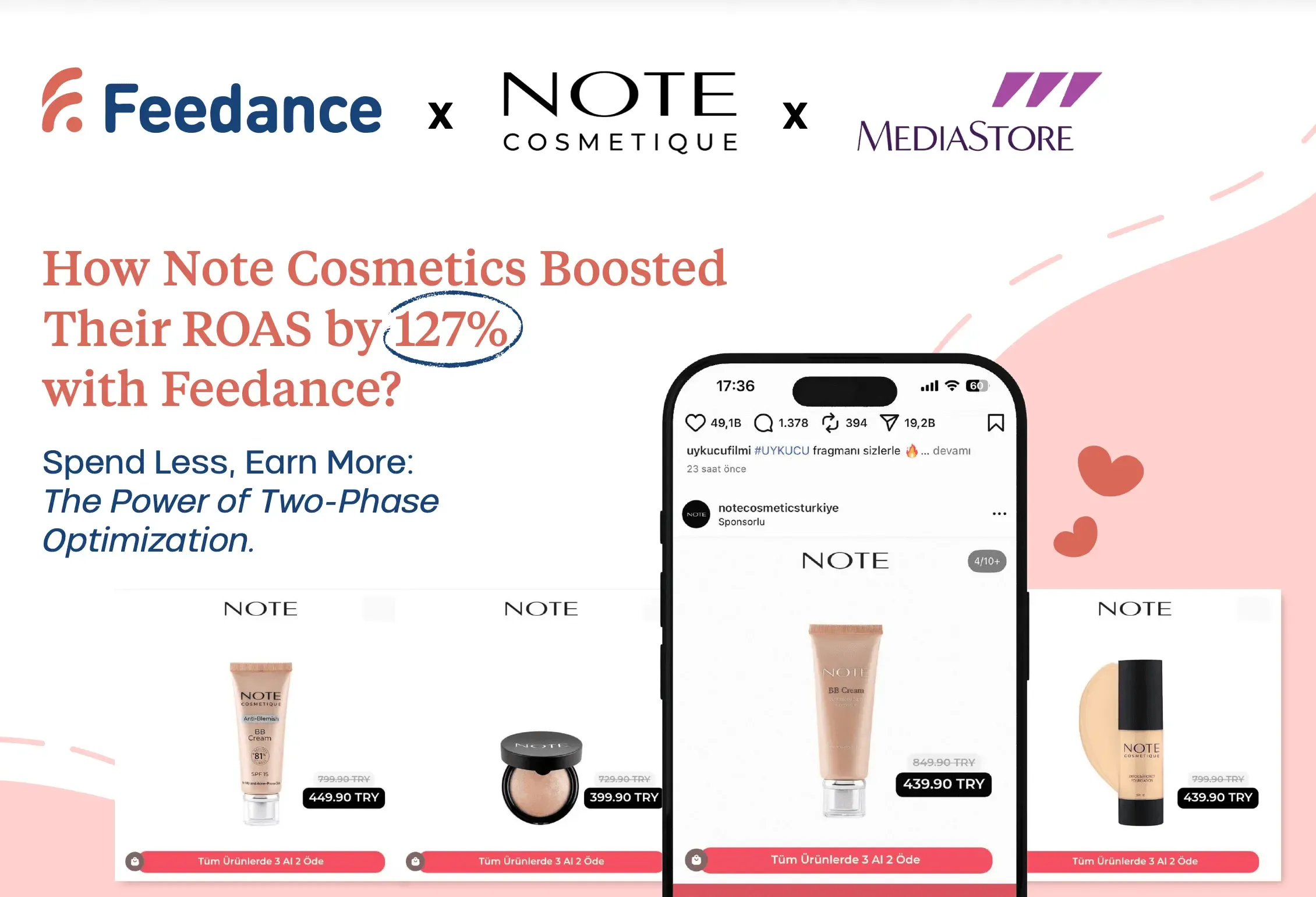
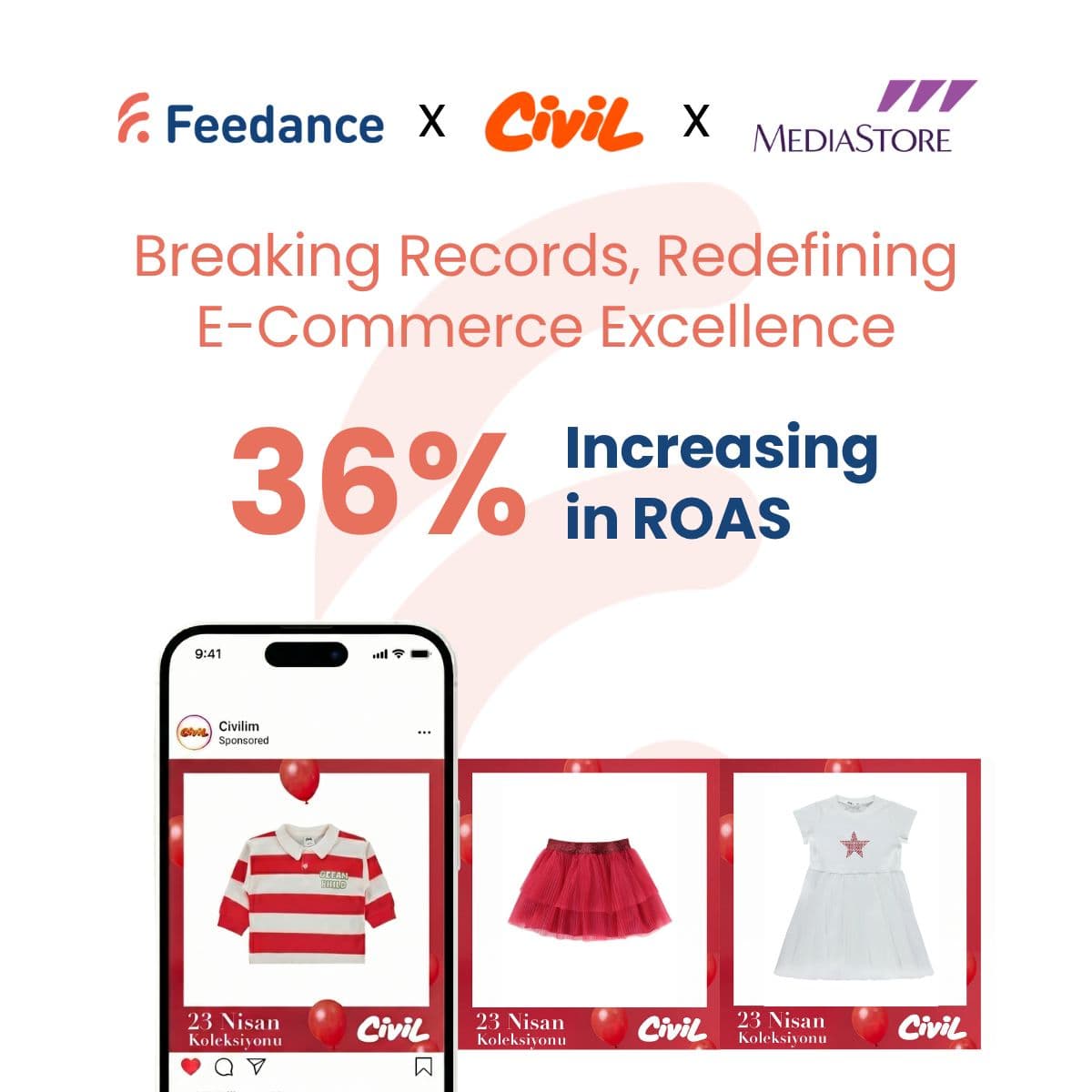
One template, every product, every format. Static, video and HTML5 creatives are built from feed data, so when a price changes, the creative changes with it.
Black Friday branding on the whole Meta catalog in about two hours.
“With its creative production feature, we improved our ROAS by 49%.”
 Murat KalayDigital Marketing Manager, Bilyoner


200+ channels and 70+ platforms supported. Performance flows back every day.
 Product feedShopify, XML, API
 Google Analytics 4Sessions, revenueGoogle AdsCost, clicks, ROASMeta AdsSpend, CTR per product
 GoogleShopping, Performance MaxMetaAdvantage+ catalog adsTikTokCatalog ads
 PinterestShopping ads
 Microsoft AdsBing Shopping
Many feed optimization options such as filtering, sorting, merging, changing content according to a certain parameter can be made
Filter options can be applied according to a certain parameter. To give some examples; * A feed channel can be created by filtering all products with "white" in the product name separately. * By filtering within the category parameter, a feed can be generated only for a product in a single category. * A separate feed can be created for products above or below a certain price * It can be created as a separate feed by selecting products with certain IDs.
In sectors whose sales increase or decrease depending on the weather, such as the tourism sector, the weather is used a lot in feeds. The food order sector, which has an increasing number of orders according to precipitation, also uses the supermarket order sector intensively.
Feed optimization refers to the process of enhancing product data feeds to ensure they meet the requirements of various marketing and sales channels, improving product visibility, accuracy, and performance across online platforms.
It enhances product discoverability, improves conversion rates, and ensures accurate, compelling product listings across all sales and marketing channels, ultimately boosting sales and customer satisfaction.
Regularly. It's best to review and optimize your feed at least once a month or whenever you add new products, change existing product information, or when the requirements of the platforms you're using change.
Connect your product feed and GA4. We will show you Product Score, 4T, Price War and Broken Size on your own catalog.