














The Client
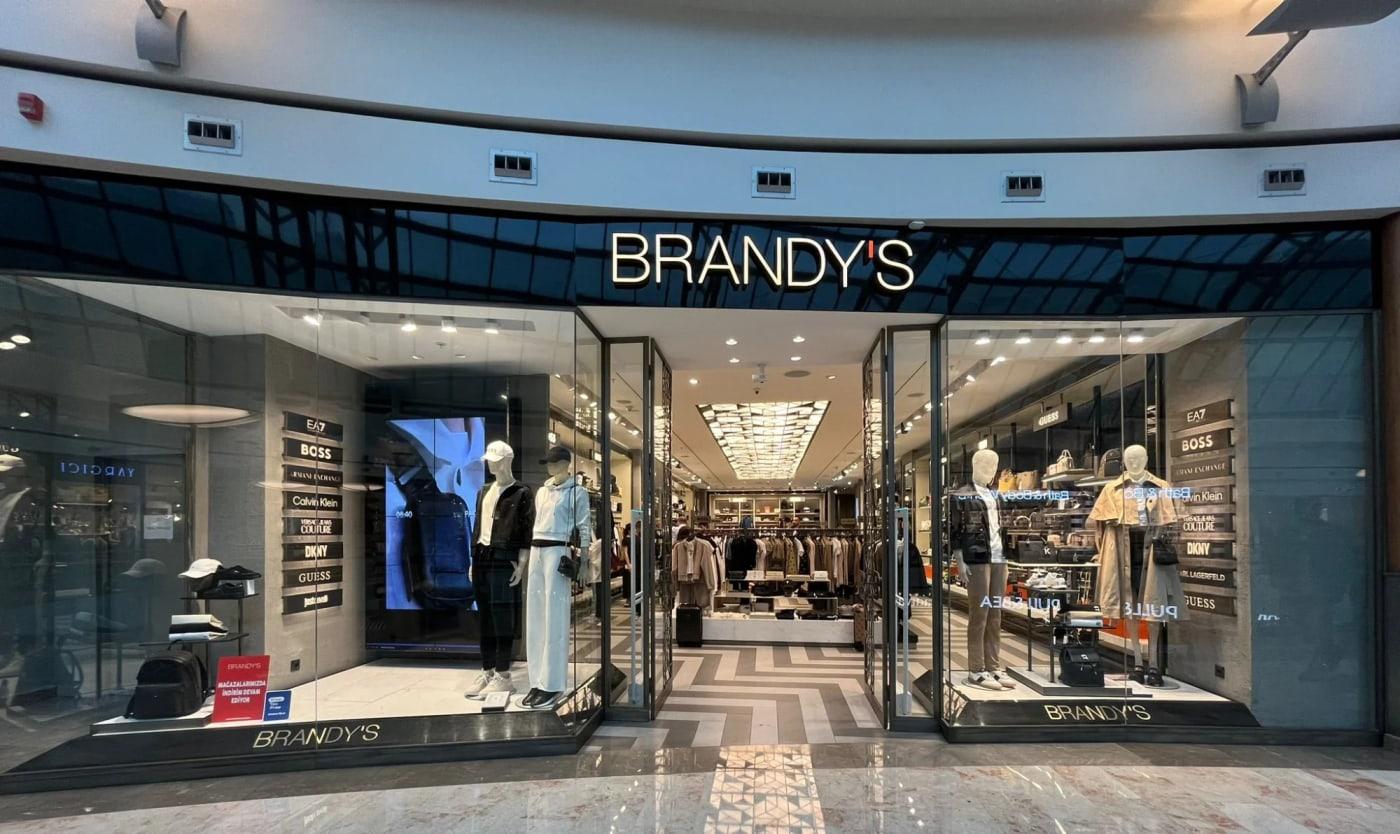
Brandy’s is a multi-brand fashion retailer. It brings international brands such as Calvin Klein, BOSS, Tommy Hilfiger, Armani Exchange, Guess and DKNY together under one roof, in its stores and in its online shop.
The online catalog runs to more than 40,000 products: women’s and men’s clothing, shoes, bags, accessories, underwear, beachwear, cosmetics and fragrance. Like every fashion catalog, it changes with the seasons, as new collections arrive and older ones sell through.
Brandy’s advertises that catalog through Google Ads campaigns built on its Google Merchant Center feed. Shoppers search for a brand, a product type or a specific item, and the ad shows them the product, its price and where to buy it.
The Problem
In a catalog of 40,000 products, Google campaigns put most of the budget behind a small group of proven bestsellers. Everything else waits in line. Those products aren’t necessarily weak; they just never get enough visibility to show what they can do.
Budget follows history. When thousands of products share one campaign, bidding gives most of the impressions to the products that have already converted, because they are the safest bets. In any single auction that is a sensible choice. Across a large catalog, it means a small share of products takes most of the spend.
Products without history cannot earn one. A product that is rarely shown is rarely clicked, so it never builds the sales history that would earn it more impressions. In the data, a product nobody wants and a product nobody has seen look exactly the same.
Campaign reports hide the size of the problem. They show how each campaign performs, not how much of the catalog is actually getting a chance. A campaign can look healthy while most of the products in it are never really advertised.
Feedance 4T Segmentation put a number on it. Sorted by traffic and return, Brandy’s catalog looked like this:
- Top (high traffic, high return): 8.3%
- Tolerable (low traffic, good return): 0.4%
- Toxic (high traffic, low return): 2.2%
- Tranquil (low traffic, low return): 89.1%
89.1% of the catalog sat in Tranquil. Fewer than one product in ten was a proven earner, and nearly nine in ten had barely been tested. The question was no longer how to squeeze more out of the bestsellers, but how to give 89% of a catalog a chance.
The Solution
Feedance 4T Segmentation places every product in one of four segments using two signals measured product by product: traffic, the attention a product gets, and return, what that attention brings back. For Brandy’s, both came from GA4. Every product gets exactly one segment, and the segment refreshes as performance changes, so a product can move from one group to another.
Instead of pushing more budget behind the products that already had it, we used the segments to give the quiet majority a campaign of its own.
1. Segment the catalog
4T Segmentation labelled every product in the 40K+ catalog as Top, Tolerable, Toxic or Tranquil using its GA4 traffic and return. This turned a vague sense that “most products don’t get much attention” into a precise list of which products those were.
2. Send the segment to the feed
Feedance wrote each product’s segment into the feed that reaches Google Merchant Center, as a field Google Ads can use as a campaign filter. Nobody had to build or maintain product lists by hand: when a product’s segment changes, the feed changes with it, and the campaign follows.
3. Give Tranquil its own budget
Tranquil products got a dedicated Google Ads campaign with a budget of its own. They no longer competed with bestsellers for the same spend, so the campaign had to find buyers for these products specifically, rather than falling back on the items it already knew would sell.
The Results
We compared the Tranquil campaign with the average of Brandy’s other Google Ads campaigns that had similar spend over the same date range.
- +70% conversions compared with campaigns with similar spend
- −60% cost per acquisition: each conversion cost less than half
- +22% conversion rate: more visitors turned into buyers
The comparison is deliberately like for like. The campaigns were matched on spend, so the result is not simply the effect of a bigger budget, and they ran over the same dates, under the same season and the same promotions.
The conversion rate matters as much as the conversion count. More conversions alone could mean the campaign bought more traffic. A higher conversion rate means the shoppers who reached these products were more likely to buy them, which is the clearest sign that these were products people wanted once they saw them.
Once they had a budget of their own, Brandy’s quietest products proved they could sell. Google no longer had to choose between them and the bestsellers. The products the campaigns had overlooked became a campaign that beat its peers.
With 40K+ products, our Google Ads budget kept flowing to a few bestsellers while most of the catalog waited in line. Feedance’s 4T Segmentation gave those quiet products a campaign of their own, and they delivered 70% more conversions than our campaigns with similar spend. Now we see our whole catalog as an opportunity, not just the top sellers.
 Yaniv StamatiEcommerce Manager, Brandy’s
What other large-catalog retailers can take from this
A quiet product is not a bad product. Low traffic and low return can mean a product does not sell. It can just as easily mean it has never been given the chance. The only way to tell the two apart is to give those products visibility of their own and measure what happens.
Measure the catalog, not only the campaigns. Campaign dashboards show whether money is being spent well. They do not show how much of the catalog is being left out. A product-level view such as 4T Segmentation shows both the products that carry the results and the ones that never get a turn.
Separate budgets let products compete on fair terms. As long as new or less-known products share a budget with bestsellers, the bestsellers will win the impressions. A campaign of their own takes that comparison away and lets the products be judged on how they actually perform.
Segments work best when they stay current. Because the segment lives in the feed and refreshes with performance, the campaign structure keeps up by itself. A Tranquil product that starts selling can move up to Tolerable or Top, and the feed carries that change to every campaign that uses it.
The bigger the catalog, the bigger the hidden opportunity. With a few hundred products, a team can check where the budget goes by hand. With 40,000, the long tail is too large to see without product-level data, and that is exactly where Brandy’s found its 70%.