
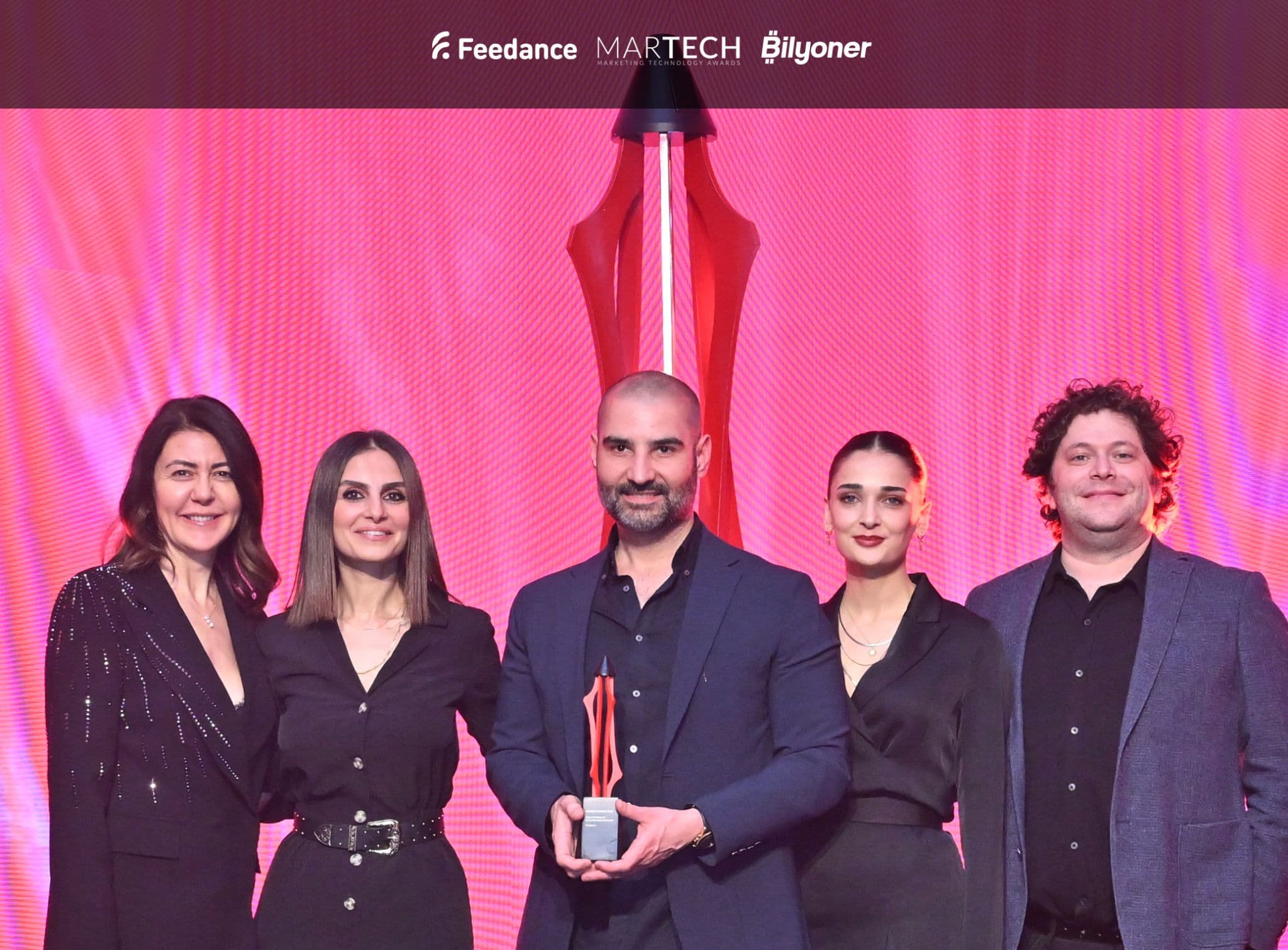











Web Summit Lisbon 2026 is over. Feedance spent the week at booth A1-33, meeting e-commerce teams, agencies and fellow founders from around the world. Between conversations we kept asking the same question: who else is here, and what are they building?
So we mapped every exhibiting startup. The result is a free, 229-page guide to all 2,587 startups from 99 countries, with a short profile for each one. We are sharing it so anyone can use it, whether you are following up on the event, looking for partners or just curious where the startup world is heading.
Download the Web Summit 2026 Startup Guide (PDF, 8 MB)
What is in the guide
The guide covers every startup listed on Web Summit's public "Featured startups" directory as of 12 November 2026. Each entry includes:
- Logo, company name and startup programme tier (ALPHA, BETA or GROWTH)
- Country and category
- Website and a link to the startup's Web Summit profile
- A short description of what the company does, taken from its own Web Summit profile
Entries are grouped into 31 categories and sorted alphabetically, so you can jump straight to the sectors you care about. The opening pages summarise the whole exhibitor base by category, country and tier.
Web Summit 2026 startups in numbers
- 2,587 startups exhibited, from 99 countries.
- 78% were ALPHA (early stage, 2,019 startups), 445 were BETA and 123 were GROWTH.
- AI and machine learning was the largest category with 565 startups, followed by SaaS (367), healthtech and wellness (240) and fintech (172).
- Advertising, content and marketing accounted for 104 startups, and e-commerce and retail for 72.
- The host country led the count: Portugal had 321 startups, just ahead of the United Kingdom (317), then Brazil (236), the United States (179), Spain (147) and Germany (146).
- 35 startups came from Türkiye, including Feedance. The guide gives them their own section.
The bigger finding: many startups are really an AI "skill"
Walking the halls, one pattern was hard to miss. A large share of the products on show were a language model wrapped around a well-defined workflow: write the content, summarise the contract, screen the CV, research the market, answer the customer.
AI assistants such as Claude now let anyone package that kind of workflow as a skill, a reusable set of instructions, and connect it to everyday tools like email, calendars, spreadsheets and CRMs. That raises a fair question for founders and buyers alike: how much of what was on display could an assistant already do?
We ran a first-pass classification over all 2,587 descriptions to find out:
- 696 startups (27%) have a core service that a skill plus off-the-shelf connectors could largely cover.
- 132 startups (5%) build infrastructure for AI agents themselves, such as agent email, identity, governance and security. They work alongside assistants, not against them.
- 210 startups (8%) use AI, but their value sits in hardware, licences or a network.
- 1,549 startups (60%) are in areas where a skill is not a substitute: physical products, marketplaces, regulated financial services and similar.
The largest skill-candidate groups were workflow and agent automation, customer-service assistants, and legal and compliance tools. The guide breaks down 15 of these business types, explains how an assistant covers each one, and names examples from the event.
What this means for startups
Being "skill-able" does not make a product worthless. It does mean that a prompt and a workflow on their own are no longer a moat. In our view, the companies that will hold their ground have at least one of these:
- Proprietary data or network effects that cannot be found elsewhere
- A hard integration, such as phone lines, WhatsApp, ERP systems or banks
- Deep domain expertise and regulatory assurance
- Distribution and real customer relationships
- A service model that sells outcomes rather than software
The smartest response is not to fight assistants but to ship into them. A startup that offers its product as an MCP connector and a ready-made skill becomes a capability inside the tools its customers already use. That is the direction we are taking at Feedance too: our value lies in the product data, channel integrations and performance signals we bring together, and we are opening that up to AI assistants through our own MCP connector.
A note on method
The data comes from Web Summit's public startup directory and each startup's public profile page, collected on 12 November 2026. Company descriptions are reproduced as the startups wrote them. The "skill potential" labels come from automated keyword rules applied to those descriptions, so treat them as a starting point rather than a verdict on any individual company. If you spot an error in your own entry, let us know and we will correct it.
Get the guide
The full guide is free to download and share. If you met us at booth A1-33, thank you for stopping by; if you didn't, we would still love to show you how Feedance turns product feeds into better-performing campaigns.
Download the Web Summit 2026 Startup Guide (PDF)
Want to see where your own product data stands? Run a free product feed audit.

Kardelen Yılmaz works on growth at Feedance, where she helps e-commerce brands and agencies get more return from every product they advertise. She writes about product feed quality, Shopping and Performance Max campaigns, creative automation, and how AI-driven shopping is changing product visibility.
LinkedIn